Unpacking Tax Levy Impacts on Operator-Reported RTP Figures Within EU-Regulated Virtual Casino Environments
Drew Roth · Oct 11, 2026
Unpacking Tax Levy Impacts on Operator-Reported RTP Figures Within EU-Regulated Virtual Casino Environments
Tax levies across EU member states create direct pressure on how operators calculate and disclose return-to-player percentages in virtual casino settings, since these fiscal requirements factor into the net revenue models that determine sustainable payout rates. Regulators in jurisdictions such as Malta, Sweden, and Germany require operators to publish RTP figures that reflect actual game mechanics, yet the underlying tax structures influence the margins operators retain after remitting duties on gross gaming revenue.
Tax Structures Across Key EU Markets
Member states apply varying tax rates on operator revenue, ranging from flat percentages on gross gaming revenue to tiered systems that escalate with volume, and these differences produce measurable effects on the RTP levels that appear in game certifications and player disclosures. In Malta, which hosts numerous licensed platforms serving EU players, the gaming tax regime combines a 5 percent duty on certain remote gaming activities with additional compliance costs, prompting operators to adjust base RTP configurations during game design to preserve profitability after tax obligations are met. Swedish authorities impose a 18 percent tax on gross gaming revenue for online operators, a rate that data from the Swedish Gambling Authority shows correlates with reported RTP averages sitting slightly below those observed in lower-tax environments during comparable periods.
Germany's 2021 Interstate Treaty introduced a 5.3 percent tax on stakes for virtual slot games alongside other levies, and subsequent reporting from licensed platforms indicates that operators recalibrated payout tables in response, producing RTP disclosures that accounted for the increased fiscal burden while remaining within regulatory minimum thresholds. Observers note that these adjustments occur during the certification process, where testing laboratories verify that published RTP values align with mathematical models that already incorporate projected tax outflows.
Mechanisms Linking Levies to Reported RTP
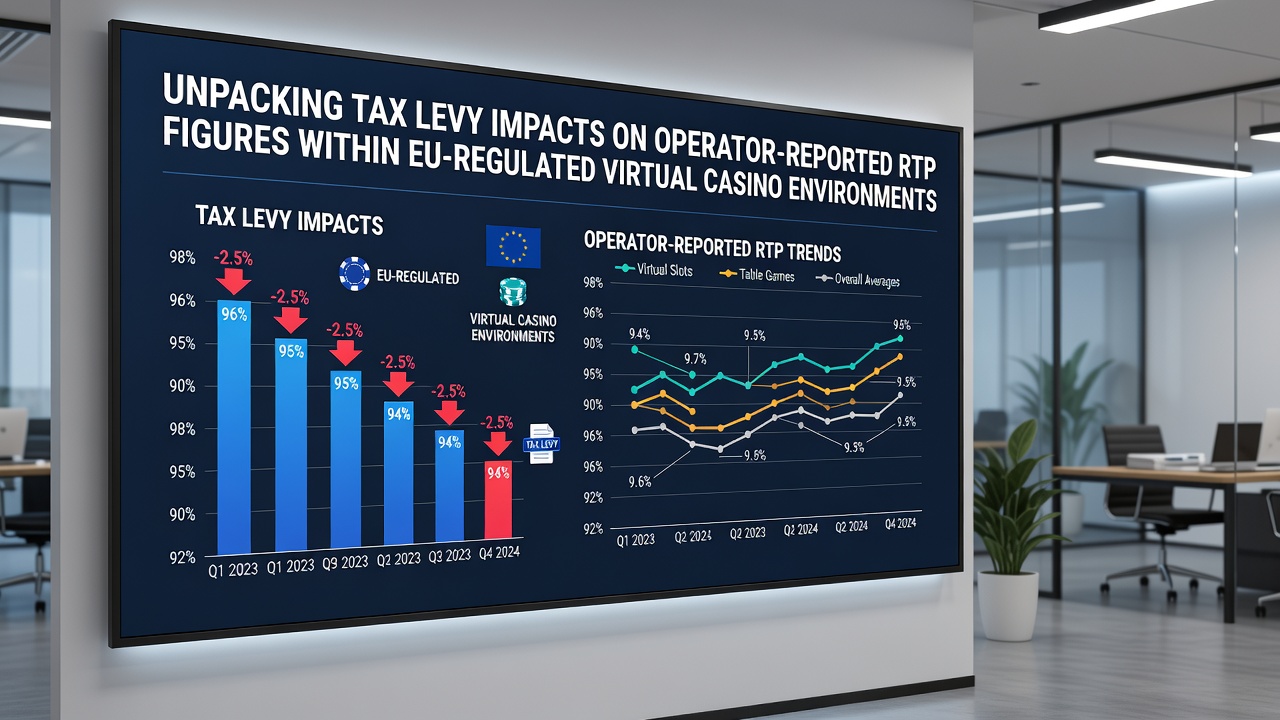
Operators integrate tax projections into their financial modeling before finalizing game parameters, which means the RTP percentages submitted for approval and later displayed to players already embed assumptions about tax liabilities calculated on a per-jurisdiction basis. When tax rates rise, models frequently show operators lowering the target RTP by a corresponding fraction to maintain the same net margin, although regulatory caps on minimum RTP prevent unlimited downward movement. Research from academic institutions examining gambling economics has documented this relationship through anonymized operator data, revealing that a 1 percent increase in effective tax burden often corresponds to a 0.2 to 0.4 percent reduction in advertised RTP for slot titles in affected markets.

Certification bodies must approve both the game mathematics and the associated tax compliance documentation, which creates an audit trail connecting levy calculations directly to the RTP figures that reach public disclosure. In October 2026, updated filings from several multi-jurisdictional operators highlighted how revised tax estimates for the final quarter prompted minor downward revisions to certain progressive jackpot RTP components, adjustments that remained fully within published ranges yet illustrated the ongoing interplay between fiscal policy and payout reporting.
Data Patterns and Regulatory Oversight
Comparative analyses conducted by European research consortia demonstrate that platforms operating under higher combined tax and levy regimes tend to publish RTP distributions clustered toward the lower end of permitted bands, whereas operators in lighter-tax jurisdictions display greater variance that includes higher-return configurations. These patterns emerge because tax liabilities reduce the revenue pool available for player returns, requiring operators to recalibrate game volatility and hit frequency to sustain business viability. Regulatory bodies receive both raw performance data and tax remittance records, enabling cross-verification that ensures disclosed RTP values accurately represent post-tax operational realities rather than pre-tax theoretical maxima.
Industry reports compiled by groups such as the European Gaming and Betting Association track these shifts across reporting periods, showing consistent alignment between tax rate changes and corresponding movements in average disclosed RTP for virtual table games and slots. Operators maintain internal dashboards that simulate multiple tax scenarios during game development, allowing them to select payout settings that satisfy both regulatory minimums and commercial targets after duties are subtracted from gross play.
Conclusion
Tax levy frameworks in EU-regulated virtual casino environments therefore function as upstream determinants of the RTP figures that operators report, with each jurisdiction's fiscal rules shaping the final percentages that appear in certified games and player interfaces. Data from regulatory filings and economic studies confirm that these impacts manifest through systematic adjustments during the design and approval stages, producing measurable differences in reported returns across markets with divergent tax structures. Continued monitoring by oversight bodies ensures transparency while the underlying economic relationships between levies and payout disclosures remain integral to operator planning in the sector.