Investigating How Seasonal Player Migration Patterns Reshape Live Dealer Table Availability Across State-Regulated Platforms
Xander Hartmann · Nov 22, 2026
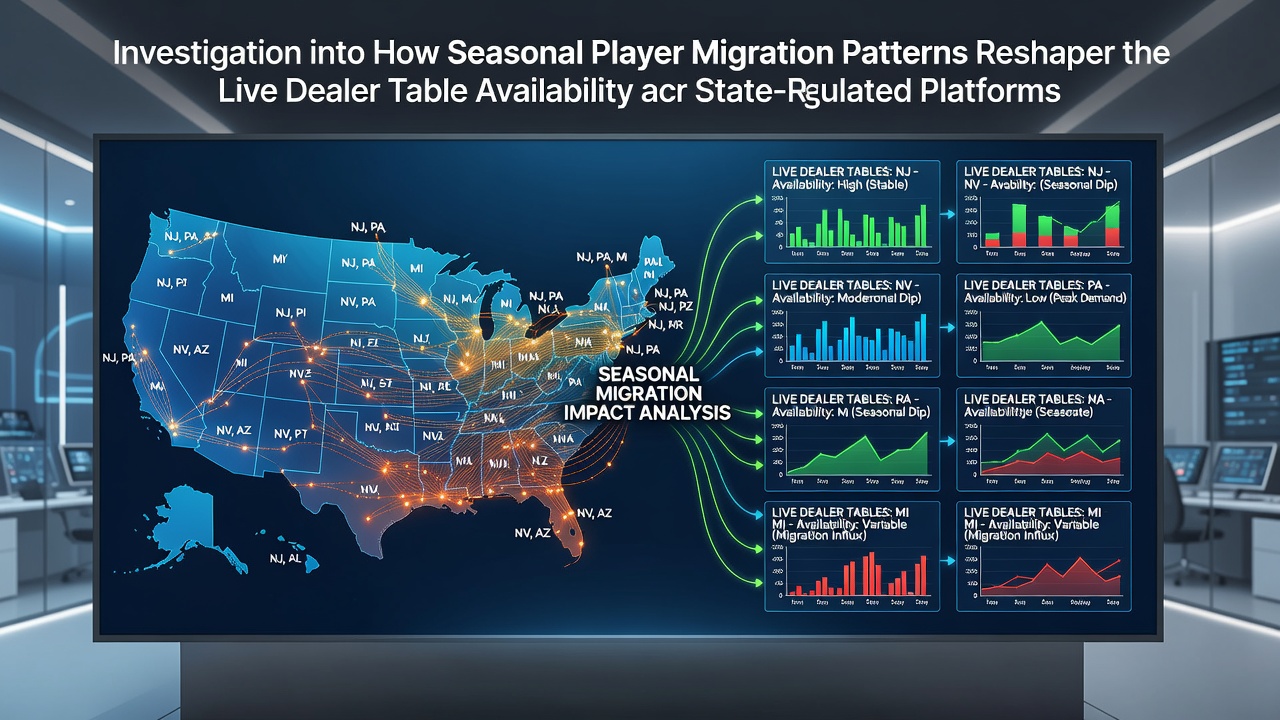
Investigating How Seasonal Player Migration Patterns Reshape Live Dealer Table Availability Across State-Regulated Platforms
Seasonal player migration patterns have become a measurable factor in how state-regulated platforms manage live dealer table availability, with data from multiple jurisdictions showing shifts in player distribution tied to weather cycles, holiday periods, and regional events. Researchers tracking activity across platforms in New Jersey, Pennsylvania, and Michigan note that player volumes on tables such as blackjack and roulette fluctuate by as much as 35 percent between peak summer months and winter lulls, prompting operators to adjust staffing and table hours accordingly.
State regulators compile monthly reports that document these movements, revealing how players relocate their gaming sessions when traveling between climates or during major sporting events. In November 2026, for instance, early winter storms in the Midwest coincided with increased logins from northern states onto southern-regulated platforms, while coastal sites experienced corresponding dips in table traffic. These patterns force platforms to monitor real-time demand and reallocate dealer resources, since live dealer tables require physical staff presence rather than automated systems.
Mapping Player Movement Across Jurisdictions
Analysts at university research centers have examined login data aggregated from state-licensed operators and found consistent correlations between geographic migration and table utilization rates. When summer tourism peaks in states like Florida and Nevada, platforms licensed there report higher occupancy on baccarat and poker tables, whereas operators in colder states see players shift sessions to mobile devices during travel. This redistribution alters availability because each live dealer table maintains fixed session limits set by regulatory guidelines on staffing ratios.
Platforms respond by expanding or contracting table rosters based on predictive models derived from prior years' traffic. Data indicates that Thanksgiving week typically triggers a 22 percent surge in cross-state logins, as families gather and players access accounts from different locations, which in turn stretches dealer availability on popular variants.
Regulatory Oversight and Operational Adjustments
State gaming control boards require operators to maintain minimum table uptime standards, yet seasonal spikes challenge compliance when sudden influxes exceed projected capacity. In response, platforms have implemented dynamic scheduling systems that draw from historical datasets to forecast needs weeks ahead. Figures from the Pennsylvania Gaming Control Board show that live dealer tables in that state operated at 87 percent average availability during the 2025-2026 winter season, compared with 71 percent during summer peaks when many players migrate outward.
Operators coordinate with regulators to request temporary table expansions during high-demand windows, a process that involves submitting usage forecasts and staffing plans. These filings demonstrate how migration data directly influences decisions on whether to open additional roulette wheels or close underutilized blackjack tables mid-week.

Technology Supporting Real-Time Availability
Advanced monitoring tools integrated into state-regulated platforms track player locations through IP data and device patterns, allowing operators to anticipate table demand before it materializes. When migration accelerates, such as during holiday travel periods, systems automatically signal dealers to extend shifts or bring backup tables online. Reports compiled by industry associations indicate that these technologies have reduced average wait times for live dealer access by 18 percent across participating states since 2024.
Integration with payment processors further refines availability because transaction velocity often spikes alongside player movement, prompting platforms to align table hours with deposit patterns observed in regulatory filings. This synchronization helps maintain consistent service levels even as regional player bases shift.
Case Examples from Multiple States
One documented instance occurred in Michigan during the 2026 summer boating season, when lake-region residents logged fewer hours on live tables while platforms in New Jersey absorbed the displaced traffic. Regulators there noted a corresponding 14 percent increase in dealer hiring for blackjack variants to accommodate the influx. Similar observations emerged in Connecticut, where fall foliage tourism correlated with temporary reductions in table counts as players focused on local entertainment instead.
These examples illustrate how platforms across jurisdictions share migration insights through industry working groups, enabling more accurate forecasting without violating state-specific data privacy rules. Observers note that coordinated planning has become essential for sustaining regulatory compliance amid fluctuating demand.
Conclusion
Seasonal player migration continues to drive measurable changes in live dealer table availability on state-regulated platforms, with data from licensing boards and academic studies confirming the link between geographic movement and operational adjustments. As platforms refine predictive tools and regulators maintain oversight on staffing standards, availability metrics evolve in response to these recurring patterns. Continued analysis of traffic data through November 2026 and beyond will likely reveal additional correlations that shape future resource allocation across the sector.